.svg)
GAP Coverage
Every benefit and limitation is defined in the addendum. This is what you show a financed customer who wants protection against depreciation and the financial risk of a total loss.
Program Details at a Glance
Maximum GAP Benefit: $50,000
Maximum Amount Financed: $125,000
Coverage Term: Matches your finance contract, up to 84 months
Eligible Vehicles: Available for eligible new and used powersports vehicles
Enrollment: Must be purchased when your original financing contract is completed
Waives the difference between the vehicle's net loan/lease payoff and the primary insurance settlement in the event of a constructive total loss — theft or total loss by accident. Includes the customer's deductible up to $1,000.
Total Loss GAP Benefit
If the covered vehicle is declared a constructive total loss — whether by theft or accidental damage — GAP waives the difference between the vehicle's net payoff and the primary insurance settlement, up to $50,000.
A constructive total loss occurs when: the vehicle is declared a total loss by the primary carrier; the vehicle is stolen and not recovered within 30 days with no primary carrier in effect; or the cost to repair the vehicle equals or exceeds its actual cash value.
Insurance Deductible Benefit
GAP includes the customer's primary vehicle insurance deductible — up to $1,000 — as part of the waivable loss calculation.
This means the customer isn't left paying their deductible out of pocket on top of any remaining loan balance after a total loss.
No Primary Insurance Scenario
If no primary carrier insurance is in effect on the date of loss, the benefit is calculated as the difference between the net payoff and the actual cash value of the vehicle — not the insurance settlement.
In theft cases with no primary insurance, a police report is required.
No Chargeback GAP
After 90 days from the contract date, there are no chargebacks to dealers if the contract is cancelled. This protects dealer income on financed deals.
What's Not Covered
Loss occurring prior to the effective date of the addendum
Commercial use vehicles, rental, emergency service, racing, or contest use
Vehicles with salvage, branded, rebuilt, or lemon-law titles
Self-financed or buy-here-pay-here dealer contracts
Financing contracts with non-uniform monthly payments
First payment due more than 90 days from the financing contract date
Fraud, intentional acts, criminal activity, or DUI/DWI
Repossession-related losses
Losses occurring outside the U.S., its territories, or Canada
Vehicles with an MSRP or amount financed exceeding $125,000
*Coverage begins upon receipt of payment. There is a 30-day initial waiting period on new contracts. Renewals at the end of term carry no waiting period. Accessories and equipment must be installed prior to or on the effective date of the contract. All service work must be authorized by the administrator in advance — unauthorized repairs will not be covered.
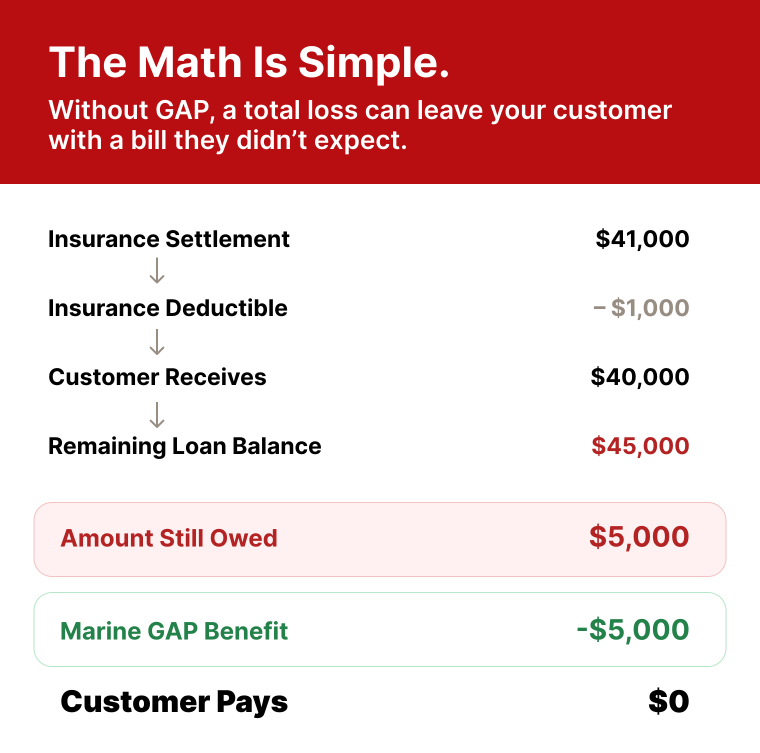
Understanding the GAP Difference
GAP Protection helps cover the difference between your customer's insurance settlement and the remaining loan or lease balance after a total loss. It can also help with covered insurance deductibles, reducing unexpected out-of-pocket expenses when they need support most.
*This is a general illustration. Actual terms and conditions may vary by state. See the contract for complete provisions, exclusions, and limitations.
Right for customers Riding on a loan or Lease.
Powersports vehicles depreciate the moment they leave the lot. Any financed customer is a candidate — especially those with low down payments, longer loan terms, or high-value vehicles.
Common Vehicles & USE Cases
Motorcycles — On-Road
Harley-Davidson
Motorcycles — Off-Road
ATVs & UTVs
Scooters
Three-Wheelers
Personal Watercraft (PWC)
Snowmobiles
Golf Carts
E-Bikes
Lawn & Tractor
Low down payment buyers — the less they put down, the bigger the potential gap between what they owe and what insurance pays
Longer-term loan customers — 60, 72, or 84-month terms mean the loan balance stays high longer while the vehicle depreciates faster
Used vehicle buyers — depreciation curves are steeper early in ownership; GAP closes that window of financial exposure
High-value vehicle purchasers — Harley-Davidson, UTV, and premium motorcycle buyers with financed amounts up to $125,000
First-time powersports buyers — less likely to understand the depreciation gap; this is an easy, meaningful add-on at point of sale
Any financed customer — if there's a loan or lease, there's a gap risk; every F&I desk should be offering this
Frequently Asked Questions
Find answers to common questions about GAP Protection, including eligibility, coverage, benefits, and how it can help if your vehicle is declared a total loss.
What is Powersports GAP Protection?
It is protection that may help cover the difference between your insurance settlement and what you still owe on your loan after a covered total loss.
What types of vehicles can it help protect?
Powersports GAP may apply to eligible motorcycles, ATVs, UTVs, snowmobiles, golf carts, personal watercraft, and similar financed vehicles, depending on program terms.
When would GAP Protection apply?
It may apply if your covered vehicle is declared a total loss due to events such as an accident, fire, theft, or another covered loss.
Why might insurance not be enough?
Insurance often pays the vehicle’s current value at the time of loss. If your loan payoff is higher than that amount, you could still owe the difference.
Does GAP replace insurance?
No. GAP is designed to work with your primary insurance after a covered total loss. You still need insurance coverage on your vehicle.
Can GAP help with my deductible?
Some programs may include deductible reimbursement, up to stated limits and where available. Check your agreement for details.
Is Powersports GAP worth considering?
If you finance your ride or golf cart, GAP may help protect your budget from an unexpected loan balance if your vehicle is totaled or stolen.
Start Offering GAP on Every Financed Deal.
One of the easiest F&I add-ons in powersports — every financed customer has a gap risk from the moment they drive off the lot.